Functional Capacity Evaluations (FCE and FCA) and Job Specific Assessments

September 9th, 2011

Functional Capacity
Evaluations (FCE and FCA) and Job Specific Assessments

Can you do Job
Function Matching with both?

By Susan J. Isernhagen PT
sisernhagen@dsiworksolutions.com

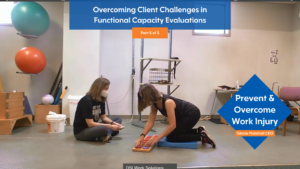
One of greatest area of confusion in work evaluations is the too-broad name “functional capacity evaluations”.  When I developed the first Functional Capacity Assessment in 1983, it was a specific test that encompassed the workitems physicians rated in medical forms. Generically, these included physical activities such as lifting, pushing, pulling, gripping, carrying, walking,climbing, hand coordination, balance and others.

Theinitial FCE/FCA was objectively done to provide information to physicians for
return to work forms and to provide employers the same objective work
information for safe return to work of their employee.

These tests were for chronic cases which included those who had multiple physical problems and vague restrictions that did not allow for good specific job placement.  It also included those with chronic pain and fearful behaviors.  The smallest group (estimated at 1% by experts) was comprised of those who did not wish to return to work but did wish to continue on comp benefits. Thus, in addition to functionally testing clients for all of the physical components, we had to be able to identify less than
full effort and also differentiate safe activity from unsafe activity.  This required the knowledge of the therapist in pathology, kinesiology, anatomy and physiology to fully evaluate safety and function. The referrers needed objective work information. MD’s needed the FCA information for return to work releases or disability ratings.  Case managers wanted specific ability levels
to improve return to work processes. Employers needed to know how to place the worker returning to work.   Thus the first Functional Capacity Evaluation – Functional Capacity Assessment objectively tested the “list” of work capacities.  The Isernhagen systems have been the most researched and demonstrated to be highly reliable.  Contact me for the research compendium.

In actuality, the most important recipient of the information is the injured/ill person.  They need to see that they can work to their maximum ability despite discomfort. While they (and all people) do have limitations, the “ability”
listing is actually the most important.  In FCE – FCA, we let the evaluees know that we will stop the test for
safety reasons so this helps them feel comfortable using full effort. . After functional capacity tests, the evaluee is more confident in ability and also knows their stopping points.  The confidence to return to work and activity comes with this knowledge.  The functional testing makes all the difference.

Functional Capacity evaluations use “generic” work items.
The tests are standardized and items are performed in a uniform method.  Because the items are generic, they may or may
not be able to be compared to specific jobs. We can only compare FCA results to
jobs with activities that have similar movement patterns.  For example, some stockroom clerks may have
duties similar to the lifting and pushing of an FCA.  However, a nurse or power company lineman
will not be as easily compared to an FCA.
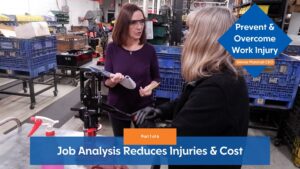
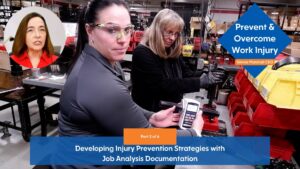
The best test for individual jobs is developed from actual job analysis.  In the DSI system, this is a Job Function
Test
developed from a validated Job Function Description™.
There is no substitute for accuracy, content validity, and evaluee confidence of a job focused test.  Job specific  tests, like FCA,  incorporate safety, effort, and scores that reflect ability and limitation.  The difference is the job specificity. At DSI, we find that most employers want information on a worker’s ability to do a specific job either at hire or in
return to work. Thus, the DSI Job Function Matching® process is used early. Workers are matched to their job until
full duty is reached.  Physicians, case managers and attorneys are also seeing the benefit of job specificity for
medical release or return to work management.

Two kinds of functional testing have been explored.

  • The Functional Capacity Evaluation – Assessment (DSI FCA) is utilized when no specific job is
    being considered or the evaluee’s general ability level is not known.  It is also used to assist the MD in
    assigning permanent ability/restriction levels.
  • The Job Function Testing/Matching® is
    used when a specific job is known. The person is evaluated against job
    specific items.  Job modifications
    are also recommended as the job has been broken down by task.  Workers appreciate the evaluator knowing
    the specific requirements of their job..

Progress in functional testing has been made by understanding and acting on the needs of
the stakeholders: the worker-patient, the employer, the physician – provider,
case managers and attorneys. Referral questions are the most important part of
ordering a functional test and they will lead to the determination of a generic FCE-FCA, a job function test™,
or a combination of the two.

Referrers and therapists should determine the best test for the evaluee. This
will save time and money, as the best test will answer the referrer’s needs and
benefit the worker-patient

© 2011, DSI Work Solutions, Inc. All Rights Reserved.

Work injury management and prevention require teamwork

August 4th, 2011

Professionals who are effective in reducing injuries and severity or reducing lost time, medical costs and disability utilize one thing: teamwork.  Both employers and medical providers succeed only when they direct their skills toward a common goal. 

Years ago I wrote an article called “there is no easy answer”.   The reason I wrote it then is even more prevalent today. Vendors continually try to “sell” easy answers.  Maybe it is the ergonomic tool that will prevent all injuries.  Maybe it is the exercise that will prevent cumulative trauma.  Maybe it is post offer testing that insures no new hires ever get injured.  Or, in medical care it may be the surgery that gets rid of pain or the pill that cures all or the test that proves someone a malingerer so no one has to pay them.  All of these “easy” answers cannot work, or at least they cannot work alone.

In a nutshell, effectively reducing injury by prevention is multifaceted.  The main components are

  • Education of the worker in safe work practices, ergonomic positions, and pause breaks
  • Strength and condition of the worker at a level that meets the job requirements
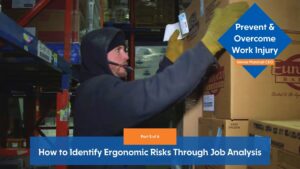
  • Jobs that are ergonomically designed to reduce physical and mental stressors while maintaining productivity
  • Using first aid interventions when symptoms arise but are not yet injuries

In the same manner work injury management uses these multifaceted principles

  • Immediate evaluation by a medical professional in an injury or illness is caused or exacerbated by work
  • Maintaining the worker role and not changing the worker into a “patient”
  • Excellent evaluation and treatment by medical professionals with inclusion of rehab professionals if the issues are musculoskeletal /functional or mental health professionals in the appropriate cases.  Interesting outcome data by DSI providers indicates that “immediate evaluation and maintaining the worker goal” is equated with best practice and most appreciated type of care. 
  • Setting return to work as the goal (99% of the time to the original job). Healing, increase in function and decrease in pain are medical methods to accomplish the return to work
  • RTW focused communication between the employer and the medical team which also includes the  worker as an educated participant

 Who are the stakeholders?

The two most important parties in work injury management and prevention are always the worker and the employer. 

In injury management, it is true that a medical team cares for an injured or ill worker. The focus is on medical care that facilitates safe work return for the worker.  Losing sight of that goal is often why the medical model can become the only model.  The worker must be transferred through the medical model back to work (healed and functionally able) and the bond between the worker and employer restored.

In injury prevention, the team onsite includes supervisors, safety, production, human resources, hiring personnel, unions or worker groups, work comp and disability personnel. Their own work is focused on keeping the workers productive and healthy while providing as safe and stressor free workplace and work methods as possible.  The work, the worksite and the workers are the integrated functional unit. 

DSI’s commitment is to facilitate teamwork for the healthiest workforce possible, and an  early and effective return to work. We strive to provide the medical team and the employer teams the best information on the match between the physical demands of the job and workers’ ability. Knowledge is power and we appreciate being part of the medical-industrial team.

© 2011, DSI Work Solutions, Inc. All Rights Reserved.